Most crashes aren’t caused by “bad luck”-they’re caused by missed clues. For new drivers, learning to spot those clues early is what turns basic driving into defensive driving.
Defensive driving means staying alert, expecting mistakes from others, and making safe choices before danger gets close. It is not about being fearful behind the wheel; it is about staying prepared.
From keeping a safe following distance to reading traffic patterns and controlling distractions, the right habits can reduce your risk on every trip. These tips will help new drivers build confidence while protecting themselves, their passengers, and everyone else on the road.
What Defensive Driving Means for New Drivers-and Why It Prevents Crashes
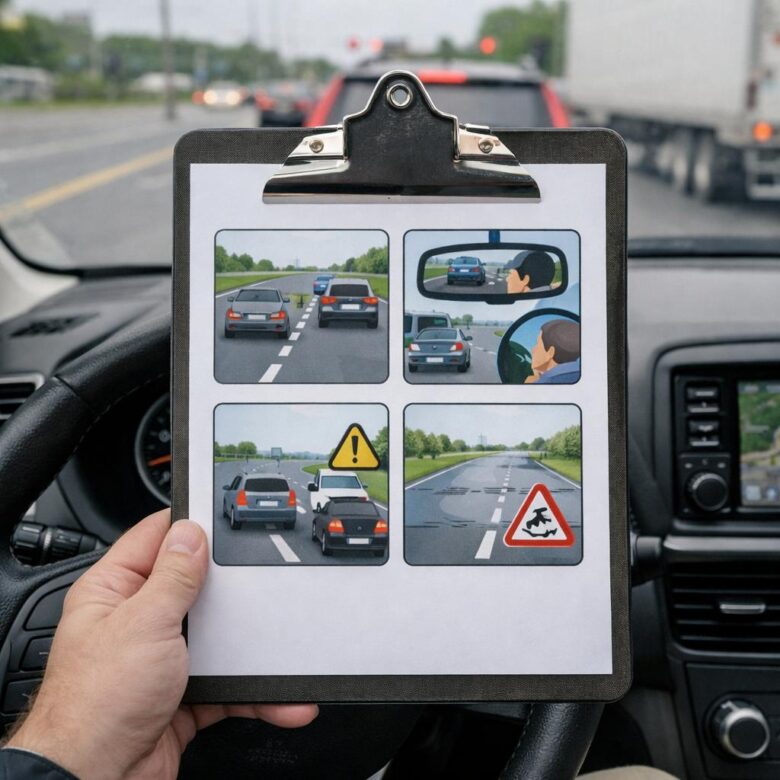
Defensive driving means staying ahead of problems instead of reacting at the last second. For new drivers, that means scanning farther down the road, keeping a safe following distance, checking mirrors often, and assuming other drivers may make mistakes. It is less about driving slowly and more about making smart decisions early.
A simple example: you are approaching an intersection and the light turns green, but a car on the cross street looks like it may not stop. A defensive driver waits a moment, checks both sides, and avoids rushing forward. That one-second pause can prevent a side-impact crash, expensive collision repair costs, higher auto insurance premiums, and possible injury claims.
New drivers can build this habit by focusing on three practical rules:
- Look 12-15 seconds ahead, not just at the car in front of you.
- Leave extra space in rain, traffic, construction zones, and school areas.
- Avoid phone use completely, even when using navigation apps.
Tools can help, but they should support good judgment, not replace it. A dash cam or a telematics app like State Farm Drive Safe & Save can give feedback on speeding, hard braking, and phone distraction, while some insurers may offer car insurance discounts for safer driving behavior. For many new drivers, reviewing those reports is a practical way to spot risky habits before they become costly mistakes.
In real driving, the safest person is often the one who notices trouble first. That awareness is the core benefit of defensive driving.
How to Apply Defensive Driving Techniques in Everyday Traffic
Defensive driving in daily traffic starts before you move the car. Adjust your mirrors, set your route on Google Maps or Waze, and put your phone on Do Not Disturb so you are not reacting to distractions at the worst moment. A good route-planning app can also help you avoid crash-heavy intersections, road closures, and sudden congestion.
In traffic, keep a space cushion that gives you time to brake smoothly instead of slamming the pedal. A simple rule is to watch the vehicle ahead pass a sign, then make sure at least a few seconds pass before you reach the same point. This habit can reduce hard braking, protect your tires and brakes, and may even support safer driving records for car insurance discounts through telematics programs.
- Scan 12-15 seconds ahead, not just the bumper in front of you.
- Check mirrors before braking, changing lanes, or entering intersections.
- Assume other drivers may run red lights, drift lanes, or stop suddenly.
For example, if you are approaching a green light and see a car edging out from a side street, ease off the accelerator instead of trusting that the driver will wait. I have seen many close calls happen because a new driver had the right of way but no escape plan. Defensive driving is not about being scared; it is about leaving yourself options.
Consider using a quality dash cam for added protection if an accident claim or insurance dispute occurs. It will not prevent every crash, but clear video can document what actually happened.
Advanced Defensive Driving Strategies and Common New Driver Mistakes to Avoid
Once you understand the basics, the next step is learning how to predict trouble before it reaches you. A smart defensive driving habit is to scan 12-15 seconds ahead, not just the car in front, so you can spot brake lights, lane closures, pedestrians, or aggressive drivers early.
One real-world example: if you see a delivery truck double-parked ahead, assume a driver may suddenly swing around it or a pedestrian may step out from behind it. Slow slightly, cover the brake, and create space before the situation becomes urgent.
- Do not “camp” in blind spots: either pass safely or stay back where other drivers can see you.
- Avoid hard braking habits: they increase crash risk and may affect telematics-based car insurance discounts.
- Never trust turn signals completely: wait for the vehicle to actually slow or commit before moving.
Useful tools can also support safer habits. A quality dash cam like Garmin Dash Cam can help review close calls, provide evidence for an accident claim, and encourage more responsible driving; some new drivers also use apps such as Life360 for location sharing and family safety alerts.
A common mistake is driving too close because traffic “feels slow.” In reality, rear-end collisions often happen at low speeds near intersections, school zones, and parking lot exits, where attention drops. Keep a larger following distance, check mirrors before braking, and treat every green light as a place where another driver might run a red.
Closing Recommendations
Defensive driving is less about perfection and more about choosing the safest option before pressure builds. As a new driver, your best advantage is time: time to scan, slow down, leave space, and avoid risky decisions.
- When unsure, wait. A missed turn or delayed merge is safer than a rushed mistake.
- When distracted, stop. Pull over before checking your phone, navigation, or messages.
- When others drive aggressively, disengage. Create distance instead of reacting.
Make safety your default habit, not your emergency response.