Your car doesn’t have to stop completely to put you in danger. A strange noise, warning light, flat tire, or sudden loss of power can turn an ordinary drive into a roadside emergency in seconds.
What you do in the first few minutes matters most. The right steps can help you avoid traffic hazards, protect passengers, and prevent a bad situation from becoming worse.
This guide explains exactly how to stay safe, where to move your vehicle, when to call for help, and what not to do while waiting on the roadside.
Immediate Safety Steps When Your Car Breaks Down on the Road
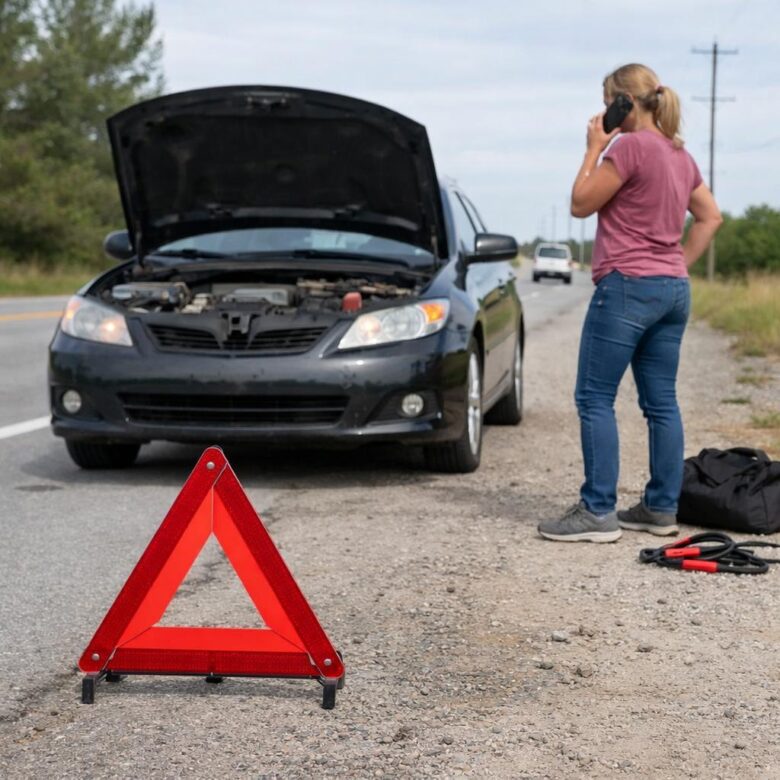
If your car starts losing power, turn on your hazard lights immediately and look for the safest place to pull over. Aim for the right shoulder, a parking lot, or an exit ramp if the vehicle can still move without forcing it. Avoid stopping in a travel lane unless the car is completely disabled.
Once stopped, keep your seatbelt on until you are sure it is safe to move. On a busy highway, it is usually safer to stay inside the car with the doors locked, especially if traffic is moving fast or visibility is poor. I have seen drivers step out to inspect a flat tire on the shoulder, only to realize how close trucks pass at highway speed.
- Turn your wheels away from traffic if you are on a shoulder.
- Place reflective triangles or road flares behind the car if it is safe to do so.
- Call for roadside assistance, towing service, or your car insurance emergency hotline.
Use your phone to share your live location with a trusted contact and your provider. Apps and services like AAA Roadside Assistance, your insurer’s mobile app, or Google Maps can help pinpoint your exact location for a tow truck or emergency responder. This is especially useful at night, in rural areas, or on roads with poor signage.
If you smell fuel, see smoke, or suspect an engine fire, get everyone out and move far away from the vehicle. Do not open the hood if flames or heavy smoke are present. In that situation, call emergency services before worrying about repair cost, towing coverage, or vehicle damage.
How to Get Roadside Assistance and Document the Breakdown Properly
Once you are safely off the road, contact roadside assistance through your auto insurance provider, vehicle warranty, credit card benefit, or a dedicated service like AAA. If you use an app from your insurer, such as GEICO Mobile or Progressive, you can often request towing service, battery jump-start, fuel delivery, or flat tire assistance without making a phone call.
Give the dispatcher clear details: your exact location, direction of travel, vehicle make and model, license plate number, and what happened before the breakdown. For example, saying “the engine lost power after the temperature warning light came on” is more useful than simply saying “my car stopped.” It helps the tow truck operator decide whether you may need a flatbed tow, a battery service, or a direct trip to a certified auto repair shop.
- Take photos of your dashboard warning lights, tire damage, fluid leaks, and the vehicle’s position.
- Save towing receipts, repair invoices, and roadside assistance confirmation numbers.
- Write down the time, location, weather, and any noises, smells, or warning signs you noticed.
This documentation matters if you file an auto insurance claim, request reimbursement, or dispute a towing cost. In real-world breakdowns, small details are easy to forget after the stress passes. A quick photo of the odometer, warning light, and roadside location can make conversations with your insurance company, mechanic, or warranty provider much smoother.
Common Breakdown Mistakes That Put Drivers at Risk
One of the biggest mistakes drivers make during a car breakdown is staying inside the vehicle when it is stopped in a dangerous spot, such as a highway lane or blind curve. If the car cannot be moved to the shoulder, it is usually safer to exit from the passenger side and stand behind a barrier, well away from traffic. A tow truck can replace a car; you cannot replace your safety.
Another common error is waiting too long to call for help. If you smell burning, see smoke, lose steering control, or have a flat tire on a busy road, contact a roadside assistance service or towing company immediately. Platforms like AAA Roadside Assistance or your car insurance app can help you request towing, battery jump-start service, fuel delivery, or tire change support without guessing who to call.
- Skipping hazard lights and warning triangles: Visibility is critical, especially at night or in heavy rain.
- Trying repairs too close to traffic: Changing a tire on the traffic side of the car is a serious risk.
- Leaving the car without essentials: Take your phone, wallet, insurance card, and emergency roadside kit if it is safe.
A real-world example: a driver with a dead battery in a shopping center parking lot may be fine waiting inside the car. But the same dead battery on a freeway shoulder is a different situation entirely. Location changes the safest decision, so treat every breakdown based on traffic speed, visibility, weather, and how quickly professional help can arrive.
Summary of Recommendations
A breakdown becomes safer and less stressful when you make calm, deliberate choices. Your priority is not fixing the car immediately-it is protecting yourself, your passengers, and other road users.
Practical takeaway: move to the safest available location, make the vehicle visible, stay aware of traffic, and call for professional help when the situation is uncertain.
If you are unsure whether it is safe to inspect the problem, wait for roadside assistance. A delayed repair is always better than taking unnecessary risks on a busy road.