
Regular maintenance prevents breakdowns, extends vehicle life, and saves money. This checklist organizes essential tasks by frequency, helping new and experienced drivers stay on top of their vehicle’s needs without overwhelm.
What You Will Learn
- Monthly checks you can perform in minutes without tools
- Quarterly maintenance items that prevent common failures
- Annual services that protect major systems
- Mileage-based intervals for deeper maintenance
- How to track maintenance and know when service is due
Monthly Checks
These quick inspections take five minutes and require no tools beyond a tire pressure gauge. Performing them monthly catches problems before they develop into expensive repairs.
1. Tire Pressure
Check all four tires including the spare when cold. Inflate to the pressure listed on the driver’s door placard. Underinflation reduces fuel economy, accelerates wear, and increases blowout risk.
2. Oil Level
With the vehicle on level ground and engine off for at least five minutes, withdraw the dipstick, wipe it clean, reinsert fully, and withdraw again. The level should be between the minimum and maximum marks. Add oil if low using the correct grade.
3. Coolant Level
Check the overflow reservoir when the engine is cold. The level should be between the minimum and maximum lines. Never open the radiator cap on a hot engine. Coolant burns severely and systems are pressurized.
4. Lights and Signals
Turn on headlights, brake lights, turn signals, and hazard flashers. Walk around the vehicle to verify all function. Enlist a helper or use reflections in windows and garage doors to check brake lights alone.
5. Windshield Washer Fluid
Top off washer fluid monthly, more frequently in winter or dusty conditions. Use fluid rated for your climate to prevent freezing. Plain water freezes and provides no cleaning agents.
| Monthly Check | Time Required | Tools Needed |
|---|---|---|
| Tire pressure | 2 minutes | Tire gauge |
| Oil level | 1 minute | None |
| Coolant level | 1 minute | None |
| Lights and signals | 2 minutes | None |
| Washer fluid | 1 minute | None |
Quarterly Checks
Every three months, perform slightly more involved inspections. These require basic tools and a few additional minutes.
6. Tire Tread Depth
Use a quarter inserted into the tread grooves. If the top of Washington’s head is visible, tread depth is approximately 4/32 inch and replacement should be planned soon. At 2/32 inch, replacement is legally required in most states.
7. Battery Terminals
Inspect terminals for corrosion, which appears as white, blue, or greenish buildup. Clean with a solution of baking soda and water if present. Ensure cables are tight and secure. Loose connections cause starting problems and charging issues.
8. Wiper Blade Condition
Check for cracked, torn, or hardened rubber. Streaking, chattering, or missed areas during operation indicate replacement need. Wiper blades typically last six to twelve months depending on climate and usage.
9. Brake Fluid Level
Check the brake fluid reservoir against the minimum and maximum marks. Low fluid indicates brake pad wear or a leak. If fluid is below minimum, have the brake system inspected before adding fluid, as the type of fluid loss matters.
Annual Services
Once per year, schedule professional service or perform more involved maintenance yourself. These items protect major systems and prevent costly failures.
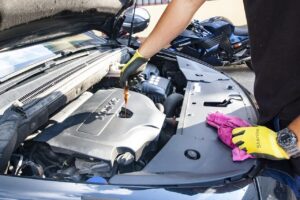
10. Oil and Filter Change
Change oil and filter according to manufacturer recommendations, typically every 5,000 to 10,000 miles or annually, whichever comes first. Even low-mileage vehicles need annual changes because oil degrades with time regardless of use.
11. Air Filter Replacement
Replace the engine air filter every 12,000 to 15,000 miles or annually. A clogged filter reduces fuel economy and acceleration. In dusty conditions, check more frequently and replace as needed.
12. Cabin Air Filter Replacement
Replace the cabin filter that cleans air entering the interior. A clogged filter reduces airflow, strains the blower motor, and allows odors and allergens into the cabin. Most vehicles have accessible cabin filters behind the glove compartment.
13. Brake Inspection
Have brake pads, rotors, calipers, and fluid inspected annually. Brake wear varies dramatically by driving habits and conditions. Annual inspection catches wear before it damages rotors or compromises safety.
14. Tire Rotation
Rotate tires every 5,000 to 8,000 miles to ensure even wear. Front tires typically wear faster due to steering and weight distribution. Rotation extends tire life and maintains consistent handling.
Warning: Never skip annual oil changes regardless of mileage. Oil accumulates moisture and combustion byproducts over time. A vehicle driven only 3,000 miles in a year still needs fresh oil to prevent internal corrosion and sludge buildup.
Mileage-Based Deep Maintenance
These services occur less frequently but are critical for long-term reliability. Track them by mileage rather than time.
15. Transmission Fluid Service
Automatic transmission fluid and filter service every 30,000 to 60,000 miles depending on manufacturer and driving conditions. Some modern transmissions are sealed and require dealer service. Neglecting this service leads to premature transmission failure.
16. Cooling System Service
Drain, flush, and replace coolant every 30,000 to 50,000 miles or per manufacturer recommendation. Coolant degrades and loses corrosion protection. Old coolant allows rust and scale that clog passages and cause overheating.
17. Spark Plug Replacement
Replace spark plugs at manufacturer-specified intervals, typically 30,000 to 100,000 miles depending on plug type. Worn plugs cause misfires, reduced economy, and catalytic converter damage. Use the exact plug type specified for your engine.
18. Timing Belt or Chain Service
Timing belts require replacement every 60,000 to 100,000 miles. Timing chains last longer but may need tensioner or guide replacement. Belt failure causes catastrophic engine damage in interference engines. This is not a service to delay.
19. Serpentine Belt and Pulleys
Inspect the serpentine belt that drives accessories for cracking, glazing, or fraying. Replace every 50,000 to 100,000 miles or at first signs of wear. Check idler and tensioner pulleys for noise and smooth rotation.
20. Differential and Transfer Case Fluids
For rear-wheel, all-wheel, and four-wheel-drive vehicles, replace differential and transfer case fluids every 30,000 to 60,000 miles. These fluids break down under heat and load, and replacement is far cheaper than differential rebuilds.
Tracking Your Maintenance
Consistent tracking prevents missed services and provides documentation for warranty claims and resale value.
Tracking methods:
- Maintenance log in the glove compartment with dates and mileage
- Smartphone apps designed for vehicle maintenance tracking
- Spreadsheet with service dates, mileage, and next due intervals
- Service stickers on the windshield for oil change reminders
- Receipts organized in a folder with notes on completed work
Key Takeaways
Maintenance is not complicated but requires consistency. Monthly checks catch problems early. Annual services protect major systems. Mileage-based deep maintenance prevents catastrophic failures. Tracking ensures nothing is forgotten.
Key takeaways:
- Perform monthly checks in five minutes to catch problems early
- Schedule annual oil changes regardless of mileage
- Follow manufacturer intervals for transmission, coolant, and timing services
- Track all maintenance for warranty protection and resale value
- Address warning lights and symptoms promptly rather than delaying
Frequently Asked Questions
Can I perform maintenance myself or do I need a shop?
Monthly checks, oil changes, air filters, and wiper blades are manageable for most owners with basic tools. Transmission service, timing belts, and brake work require more expertise and specialized tools. Know your limits and use professionals when safety-critical systems are involved.
What happens if I skip maintenance?
Skipped maintenance accelerates wear and leads to failures that cost far more than the maintenance would have. A skipped thirty-dollar oil change can lead to a four-thousand-dollar engine replacement. The financial math overwhelmingly favors maintenance.
Should I follow the severe or normal maintenance schedule?
Most drivers operate under severe conditions more than they realize. Short trips, stop-and-go traffic, extreme temperatures, and dusty environments all qualify. When in doubt, follow the severe schedule for greater protection.
How do I know when a service is due?
Check your owner’s manual maintenance schedule. Many vehicles display maintenance reminders in the instrument cluster. Track mileage and dates manually as a backup. Set phone reminders for upcoming services.
For more guidance on avoiding costly repairs, read our article on most expensive car repairs and how to avoid them