By Cars Cola Coins Editorial Team
Fuel-saving advice is more useful when you can compare it with your own driving. This two-part exercise uses one normal week as a baseline, followed by a seven-day experiment focused on route planning, trip consolidation, idling and smoother speed control.
The aim is not to produce a guaranteed percentage or cash figure. Vehicles, routes, traffic, weather, passenger loads and driving schedules differ. Instead, you will collect enough information to see which changes are practical and whether your vehicle’s measured fuel use moves in the right direction.
Start With One Week of Your Normal Fuel Use
For the first week, drive normally. Do not deliberately accelerate more gently, avoid traffic or combine errands just to improve the result. A baseline is only useful when it reflects your usual routine.
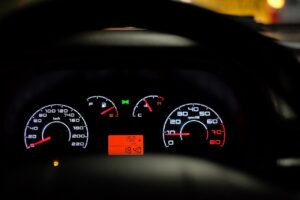
At the beginning of the week, reset the vehicle’s trip meter and fuel-economy display if equipped. Record the odometer reading, displayed average fuel economy and approximate fuel level. At the end of the week, record the same information along with the distance traveled.
A dashboard fuel-economy display may not show the exact amount of fuel consumed, but it can still be useful for comparing two similar periods when it is reset and read consistently. If you calculate consumption from fuel purchases, keep receipts and use the same measurement method for both weeks. Do not continue adding fuel after the pump shuts off automatically.
- Distance: Record miles or kilometers traveled.
- Fuel use: Record gallons, liters or the dashboard’s average-economy reading.
- Trips: Count separate outings rather than only individual stops.
- Idling: Estimate avoidable stationary engine-running time.
- Conditions: Note unusual congestion, severe weather, heavy loads or major route changes.
Keep the vehicle’s condition reasonably consistent across both weeks. Tire pressure should follow the vehicle placard and tires should be checked using an appropriate gauge when conditions allow. Use the oil grade, fuel and maintenance schedule specified by the vehicle manufacturer. This experiment is about behavior, so avoid introducing unrelated maintenance changes between the baseline and test periods unless safety or reliability requires them.
Seven-Day Fuel-Habit Experiment
During the second week, apply one main change each day while continuing useful changes from earlier days when practical. The table provides a simple plan and a measurement to record. Adapt the order to your schedule without creating an unsafe or inconvenient route.
| Day | Habit to test | What to record |
|---|---|---|
| 1 | Plan destinations before leaving and choose a sensible route. | Distance traveled and any unnecessary backtracking avoided. |
| 2 | Combine compatible errands into one outing. | Number of separate outings and total stops completed. |
| 3 | Reduce avoidable parked idling where safe and appropriate. | Estimated idling minutes and the reason for unavoidable idling. |
| 4 | Accelerate progressively and look farther ahead for changing traffic. | Instances of abrupt acceleration or braking that could safely have been avoided. |
| 5 | Limit unnecessary speed variation while following traffic and road rules. | Whether speed remained reasonably steady on suitable sections. |
| 6 | Repeat the habits on a familiar route from the baseline week. | Trip distance, travel conditions and displayed fuel economy. |
| 7 | Use the combined habits during a normal day rather than an idealized test drive. | Total distance, trips, idling and end-of-week fuel-use reading. |
Record information only while parked in a safe location. Do not operate a phone, write notes or reset displays while driving. Follow local road rules and the instructions for your vehicle’s controls.
Reduce Unnecessary Trips Before Chasing Small Efficiency Gains
The clearest way to reduce fuel use is often to avoid unnecessary distance. Before leaving, list the stops you need to make and arrange them in a practical sequence. Check business hours, pickup readiness and route disruptions so a closed location or missed turn does not create another journey.
Trip consolidation does not mean forcing every task into one complicated drive. Combine errands only when the destinations and timing fit naturally. A long detour to avoid a future short trip may increase total distance rather than reduce it.
- Group stops located in the same area.
- Avoid returning home between compatible errands when it is reasonable not to.
- Choose a direct, suitable route rather than automatically selecting the shortest-looking road.
- Consider whether a task can wait and be combined with a planned journey.
- Remove roof-mounted carriers when they are no longer needed, following their installation instructions.
Route choice must still account for road closures, weather, lighting, traffic, vehicle restrictions and personal security. Do not use an unsuitable road or stop in an unsafe place merely to shorten the recorded distance. Navigation estimates are planning aids, not a substitute for signs, local restrictions or current conditions.
Smooth Driving Is Something You Can Measure
“Drive smoothly” can sound vague, so measure specific behaviors. Count abrupt accelerator inputs, avoidable hard braking events and repeated speed changes on sections where traffic permits a steady pace. The objective is fewer unnecessary changes, not slow acceleration at every junction or holding up surrounding traffic.
Look farther ahead for traffic lights, queues, merging vehicles and changing speed requirements. When conditions allow, ease off the accelerator earlier instead of maintaining power until heavy braking becomes necessary. Always preserve an appropriate following distance and be ready to brake when safety requires it.
Cruise control may help maintain a consistent speed on suitable roads, but it is not appropriate in every situation. Use it only as described in the owner’s manual and when weather, traffic, road surface and visibility make its use suitable. Driver-assistance features do not remove the driver’s responsibility to control the vehicle.
Do not coast in neutral, switch off the engine while moving or drive substantially below the traffic flow to pursue a better reading. Obey posted rules and adjust speed for road, weather and traffic conditions. Legal requirements vary by jurisdiction.
Idling and Warm-Up Practices Depend on the Vehicle and Conditions
For this experiment, distinguish avoidable parked idling from engine operation needed for visibility, climate control, traffic movement or vehicle operation. Record the reason instead of treating every stationary minute as waste.
Warm-up guidance varies with vehicle design, temperature and operating conditions. Follow the owner’s manual rather than a universal time limit. Before moving, ensure windows and mirrors provide adequate visibility and that the vehicle is safe to operate. In severe heat or cold, passenger safety and visibility take priority over the experiment.
Do not switch off the engine while moving or when doing so would interfere with safe vehicle control. At traffic signals, railway crossings or other controlled locations, follow local rules, posted instructions and the vehicle manufacturer’s guidance. If the vehicle has an automatic stop-start system, use its controls as described in the owner’s manual.
Never run an engine in an enclosed space. If exhaust fumes may be entering the passenger compartment, move into fresh air when it is safe to do so and seek qualified assistance. Contact emergency services if anyone develops symptoms or an immediate hazard exists.
Compare the Result With Your Own Baseline
At the end of the experiment, compare distance-normalized fuel use rather than looking only at the amount purchased. Buying less fuel does not demonstrate improvement if the test week also involved much less driving.
- Miles per gallon: Divide miles traveled by gallons used. A higher result indicates less fuel used per mile.
- Liters per 100 kilometers: Divide liters used by kilometers traveled, then multiply by 100. A lower result indicates less fuel used per kilometer.
- Dashboard comparison: Compare readings only when the display was reset at equivalent points and the units remained unchanged.
Also compare the number of outings, total distance, avoidable idling and frequency of abrupt speed changes. A useful result may be a shorter route or fewer separate trips even if the fuel-economy display changes very little.
Treat a one-week difference cautiously. Congestion, weather, passenger load, cargo, use of climate control and the mix of local and highway driving can affect the result. If the two weeks were very different, repeat the experiment under more comparable conditions rather than drawing a firm conclusion.
Keep the habits that fit your routine without compromising safety. If fuel use changes sharply without an obvious change in routes or conditions—or if the vehicle shows a warning light, fuel odor, fluid leak, unusual smoke, loss of power or abnormal running—do not assume driving style is the cause. Consult the owner’s manual and arrange assessment by a qualified professional. Use roadside assistance or emergency services when the vehicle cannot be operated safely.

The Cars Cola Coins Editorial Team publishes practical, beginner-friendly content about car maintenance, fuel efficiency, road safety, vehicle ownership, and everyday automotive decisions. Our guides are prepared for general educational purposes, with a focus on clear explanations, realistic maintenance practices, and accessible information for drivers with different experience levels. The content does not replace vehicle inspection, diagnosis, or repair by a qualified automotive professional.