What if your tires are quietly wasting fuel every time you drive?
The best tire pressure for better fuel economy is usually the vehicle manufacturer’s recommended PSI-not the number printed on the tire sidewall.
Even a few PSI too low can increase rolling resistance, forcing your engine to work harder and burn more fuel. Too high, and you may sacrifice traction, braking performance, and tire wear.
Knowing the right pressure-and checking it at the right time-can improve MPG, extend tire life, and make your car safer without changing how you drive.
What Is the Best Tire Pressure for Fuel Economy and Why It Matters
The best tire pressure for fuel economy is usually the PSI listed on your vehicle’s driver-side door sticker, not the maximum PSI printed on the tire sidewall. That factory-recommended tire pressure is calculated for your car’s weight, suspension, braking performance, tire size, and expected fuel efficiency.
Underinflated tires create more rolling resistance, which means your engine has to work harder and burn more fuel. In real-world driving, a sedan recommended at 35 PSI that drops to 28 PSI can feel slightly heavier on acceleration, especially during city driving, where stop-and-go traffic already increases fuel cost.
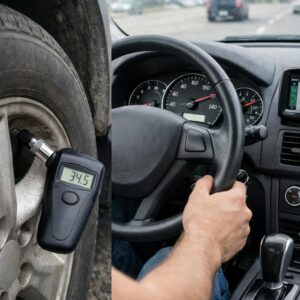
For the most accurate reading, check tire pressure when the tires are cold, ideally before driving or after the car has been parked for several hours. A quality digital tire pressure gauge, such as the AstroAI Digital Tire Pressure Gauge, is inexpensive and more reliable than guessing at a gas station air pump.
- Check PSI at least once a month.
- Recheck pressure before long highway trips.
- Adjust PSI when temperatures change sharply.
Proper inflation also helps tires wear evenly, which can delay the cost of tire replacement and improve vehicle safety. Overinflating may reduce rolling resistance slightly, but it can hurt traction, ride comfort, and braking, so it is not a smart fuel-saving strategy.
A practical habit is to keep a portable tire inflator in the trunk and compare readings with your tire pressure monitoring system. TPMS warnings are useful, but they often alert you only after pressure has dropped significantly, not when fuel economy is already being affected.
How to Check and Adjust Tire Pressure for Maximum MPG
Check tire pressure when the tires are cold, ideally before driving or at least three hours after parking. Use the PSI number on the driver-side door jamb, not the maximum pressure printed on the tire sidewall, because the door sticker is matched to your vehicle’s weight, handling, and fuel economy targets.
A good digital tire pressure gauge is worth the small cost because gas station gauges are often inaccurate or damaged. I’ve seen drivers chase poor fuel mileage for weeks, only to find one rear tire was 6 PSI low during a quick check with a JACO digital tire pressure gauge.
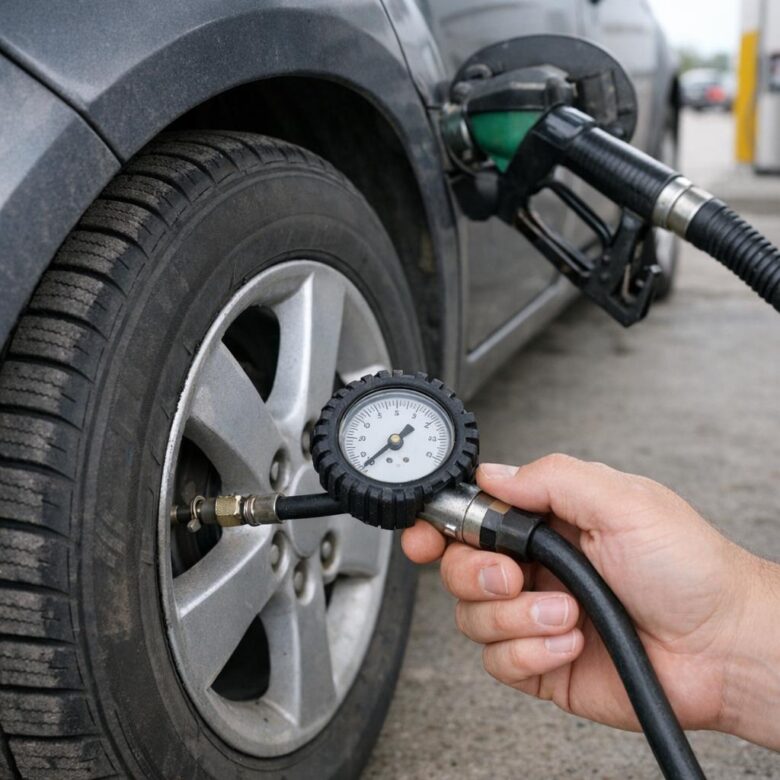
- Remove the valve cap and press the gauge firmly onto the valve stem.
- Compare the reading with the recommended PSI on the door placard.
- Add air with a portable tire inflator or release air slowly if overinflated.
For everyday driving, adjust all four tires to the recommended cold PSI, then recheck after adding air because pressure can change quickly. If you carry heavy cargo, tow a trailer, or drive long highway routes, check the owner’s manual for load-specific tire pressure guidance.
A portable inflator such as the Viair 88P or a quality 12V air compressor can save time and help you avoid paid air pumps. Make tire pressure part of your monthly car maintenance routine, and check it before road trips, seasonal temperature changes, or when your TPMS light comes on.
Common Tire Pressure Mistakes That Reduce Gas Mileage
One of the biggest mistakes is setting tire pressure based on the number printed on the tire sidewall. That number is the maximum pressure the tire can handle, not the recommended PSI for fuel economy, tire wear, or safe handling. Always use the PSI listed on the driver-side door sticker or your vehicle owner’s manual.
Another common issue is checking pressure after driving. Tires heat up on the road, which raises the PSI reading and can make underinflated tires look normal. For the most accurate result, check them in the morning with a quality digital tire pressure gauge, such as the JACO ElitePro Digital Tire Pressure Gauge, before the car has been driven.
- Ignoring seasonal changes: Cold weather can lower tire pressure, which increases rolling resistance and fuel cost.
- Relying only on TPMS: A tire pressure monitoring system usually warns you after pressure is already low, not when it is slightly inefficient.
- Forgetting the spare tire: A low spare can become an expensive roadside assistance problem during a flat.
A real-world example: a commuter who drives 40 miles a day may notice more frequent fuel stops when tires are just a few PSI low, especially in winter. I’ve seen this happen often during routine tire service checks-drivers assume their tires are fine because they “look okay,” but visual inspection rarely catches mild underinflation.
Overinflation is a mistake too. It may slightly reduce rolling resistance, but it can reduce traction, create uneven tread wear, and increase tire replacement cost over time.
Key Takeaways & Next Steps
The best tire pressure for fuel economy is the vehicle manufacturer’s recommended PSI, checked when tires are cold. It offers the safest balance between lower rolling resistance, even tire wear, braking performance, and ride control.
- Check pressure at least once a month and before long trips.
- Use the door-jamb sticker, not the maximum PSI on the tire sidewall.
- Avoid overinflating just to save fuel; the small gain can reduce traction and comfort.
For most drivers, consistent maintenance-not extreme pressure-is the smartest way to improve mileage and protect tire life.